Uterine fibroids are among the most common gynecological conditions affecting women globally. These non-cancerous growths develop in or on the walls of the uterus and vary widely in size and number. For many, the first signs appear subtly with heavy menstrual bleeding, persistent pelvic pain, and frequent urination. Over time, these symptoms can spiral, disrupting daily life, intimacy, fertility, and emotional well-being.
What Are Fibroids?
Uterine fibroids — also known as leiomyomas — are among the most common gynecological conditions worldwide. These non-cancerous growths form in or around the uterus and vary widely in size, number, and location. While some fibroids are as small as a pea, others can grow as large as a watermelon. Many women may develop a single fibroid, while others experience multiple.
Fibroids typically occur between the ages of 15 to 49, fueled by estrogen. There are several types based on their position:
- Intramural: Within the muscular wall of the uterus
- Submucosal: Beneath the uterine lining, protruding into the cavity
- Subserosal: On the outer wall of the uterus
- Pedunculated: Attached by a thin stalk inside or outside the uterus

A diagram showing different types of fibroids and their location.
What Causes Fibroids?
The exact cause remains unclear, but several contributing factors have been identified:
- Genetics: A family history increases your risk significantly.
- Parity: Women who have never been pregnant (nulliparous) face a higher risk due to sustained estrogen exposure. In contrast, multiple pregnancies may offer protective hormonal effects.
- Obesity: Increased fat tissue raises estrogen levels, encouraging fibroid growth.
- Smoking: Although not a direct cause, smoking may complicate fibroid treatment by affecting healing and circulation.
Common Symptoms of Fibroids
Some women may show no symptoms at all. However, fibroids can cause disruptive and progressive signs, including:
- Heavy or prolonged menstrual bleeding (Menorrhagia): Due to impaired uterine contractions.
- Pelvic pain or pressure (Dysmenorrhea): Caused by fibroid pressure on nearby organs.
- Frequent urination: Frequent urination can be a symptom of uterine fibroids, particularly when they grow large enough to press on the bladder.
- Cosmetic and anatomical changes: Enlargement or distortion of the uterus may lead to visible bulging.
- Infertility and miscarriage: Especially when fibroids interfere with implantation or pregnancy continuity.
How Are Fibroids Diagnosed?
Diagnosis typically begins with a detailed medical history and physical exam, where your gynecologist will explore:
- Menstrual cycle patterns.
- Pain location and severity.
- Signs of anemia.
- Uterine enlargement or tenderness.
Pelvic examination, pap smear, and abdominal inspection follow. Imaging tests such as ultrasound and MRI confirm the fibroids’ type, size, and location, guiding the treatment strategy.
How Are Fibroids Managed?
Management of fibroids highly depends on the lady, their age, and their fertility goals will now determine what procedures will be undertaken.
Options of Treatment
Conservative approach. This focuses on managing symptoms and preventing the need for surgery, rather than directly removing the fibroids. This approach includes watchful waiting and medications. It’s a safe option for many women, especially those approaching menopause, as fibroids often shrink during and after menopause.
Medical approach. It focuses on managing symptoms and, in some cases, shrinking the fibroids. Common approaches include hormonal medications to regulate periods and potentially shrink fibroids, pain relievers for symptom management, and non-surgical procedures like uterine fibroid embolization. Atrial embolization is a minimally invasive procedure where tiny particles are injected into the blood vessels supplying the fibroids, cutting off their blood supply and causing them to shrink.
Surgical approach.
Myomectomy: Myomectomy allows you to have your fibroids removed and get relief from your symptoms while still preserving your uterus. It’s a viable option for women who are still interested in having children.
Hysterectomy: A hysterectomy is the complete removal of the uterus and can be ideal for people with multiple, large fibroids who don’t plan to have children.
Fibroids may recur even after surgical removal, especially if the individual remains within the reproductive age range, as the hormonal environment continues to support their growth.

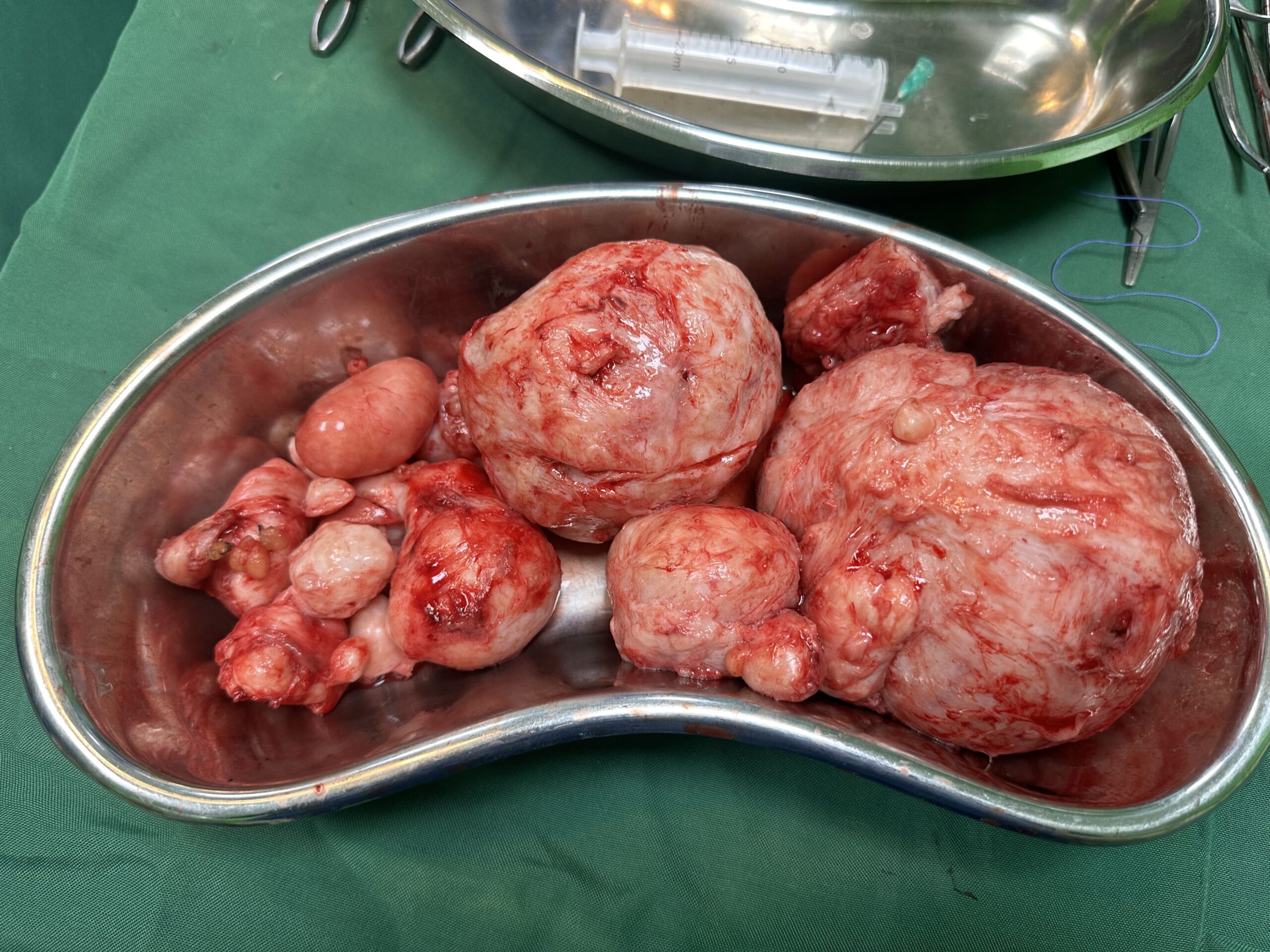
Fibroids that have been surgically removed.
Care after Surgery
Early Ambulation. Walking around post-fibroid surgery promotes proper blood circulation throughout the body, reduces the risk of post-operative complications such as deep vein thrombosis, and supports a faster recovery process.
Blood Transfusion. Procedures such as myomectomy may result in significant blood loss, necessitating blood transfusion to manage or prevent anemia-related complications.
In Conclusion
Women need to understand the symptoms associated with uterine fibroids. While some fibroids may remain asymptomatic, warning signs often include irregular heavy menstrual bleeding, lower abdominal swelling or pressure, frequent urination, and, in some cases, fertility challenges. Recognizing these symptoms early enables timely diagnosis and effective management. Once diagnosed, it is important to engage in an open and informed discussion with your gynecologist. Together, you can navigate treatment options and plan for ongoing care that supports your reproductive health. With the right medical support, fibroids are treatable, allowing you to embrace womanhood fully and live a vibrant, healthy life.